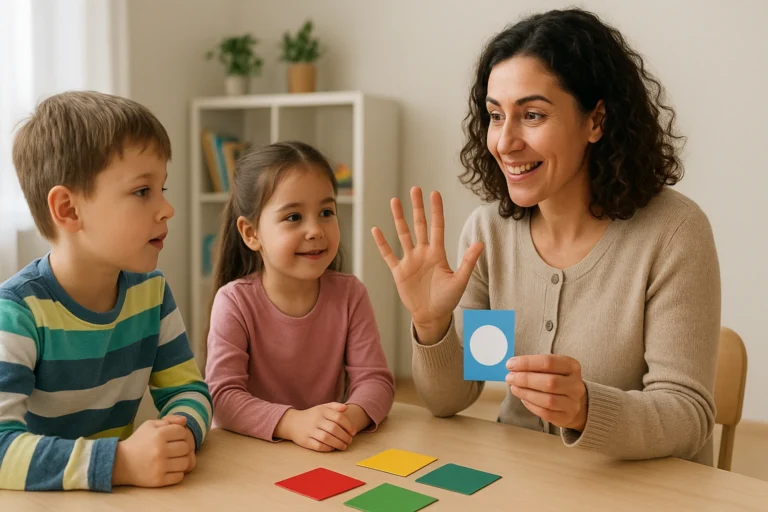
Can Autistic Children Live a Full, Independent Life? What Parents Should Know (2026)

Can Autistic Children Live a Full, Independent Life? What Parents Should Know (2026)

This is the question almost every parent asks silently in the first weeks after a diagnosis: what will my child’s life look like? Will they have friends, a job, independence, happiness? The short answer is that many autistic people live full, connected, independent lives – and that the range of outcomes is wide and heavily influenced by support, understanding and opportunity. This 2026 guide gives an honest picture, including the parts parents worry about most. (Updated for 2026.)

Can Autistic Children Live a Full Life in 2026?

Yes – many do. Autistic adults work, study, marry, raise children, build friendships and contribute in every field. Others need lifelong support with daily living, and live full lives of a different shape. Both are real, and neither is a failure. What the evidence in 2026 shows clearly is that outcomes are not fixed at diagnosis: early support, communication, education, family understanding and an accommodating environment all meaningfully shape what a child’s adult life can look like.

The word worth retiring, gently, is “normal.” The useful question is not whether your child will be normal, but whether they will be able to communicate, cope, connect and be content. Those are the goals worth working towards.

Why Outcomes Vary So Much

Autism is a spectrum, and the differences between autistic people are enormous. Three factors influence long-term outcomes most consistently in the research:

  • Communication. Developing a reliable way to communicate – speech, gestures, pictures or a device – is one of the strongest predictors of independence and wellbeing.
  • Co-occurring conditions. Intellectual disability, epilepsy, anxiety, ADHD and sleep difficulties each affect the picture, and each can be supported.
  • Environment. Understanding families, inclusive schools, accommodating workplaces and access to support change outcomes substantially – which is why advocacy matters as much as therapy.

None of these is fixed. All of them can be worked on.

Can Autism Improve With Age?

Autism itself does not disappear with age, but many autistic people’s day-to-day functioning improves considerably as they grow. Children learn communication and coping strategies, understand their own sensory needs, and find environments that suit them. Adolescence can bring new challenges (social complexity, anxiety), and adulthood often brings relief as people gain control over their surroundings. Progress is rarely linear – plateaus and leaps are both normal.

Does Autism Affect Life Expectancy? (2026)

This question worries parents deeply, so it deserves a careful, honest answer. Research has found reduced average life expectancy in autistic populations, but the reasons are important and largely addressable: higher rates of co-occurring medical conditions such as epilepsy, accidents and injuries (including risks linked to wandering), delayed or poorer access to healthcare, and mental health difficulties in adulthood. These are risks to be managed, not destinies.

Practically, that means: keep up regular medical check-ups, take safety planning seriously (supervision, water safety, ID measures where wandering is a risk), address mental health early, and teach self-advocacy and health communication as your child grows. These are the same protective steps that make the statistic less relevant to your child.

How Support in Childhood Shapes Adult Life

Childhood focus What it supports in adulthood
Communication (any form) Independence, relationships, self-advocacy, safety
Daily-living and self-care skills Practical independence at home
Emotional regulation and coping Mental health, work and relationship stability
Social understanding at the child’s own pace Friendships and workplace navigation
Confidence and self-understanding Willingness to seek help and to keep trying
School participation Education, qualifications, opportunity

A gentle note: the goal is not to make an autistic child appear non-autistic. Research and autistic adults both suggest that masking – hiding autistic traits to fit in – carries a mental health cost. Support that builds skills while respecting who a child is tends to age far better.

How CBT2 Works Towards Long-Term Outcomes (2026)

CBT2, founded by Dr. Anupama Maruvada in JP Nagar, Bangalore, is a holistic Psychological Evaluation and Treatment Center for all ages – one stop for Children and Adult concerns. It focuses on exactly the childhood foundations that shape adult life: communication, regulation, daily-living skills and participation in the world – built through behavior therapy, early intervention and structured parent training, with parents as partners.

Much of that work runs through the BMSI (Behavior Modification and School Integration) Program, developed by Dr. Anupama Maruvada in 2008. BMSI stimulates cognitive, academic, emotional, social, communication, gross motor, fine motor, sensory and school-readiness areas at the same time rather than one after another – at the center and at home, with parents supported through on-phone sessions – so a young child loses as little developmental time as possible. Support begins with an initial evaluation, plans are individualized, and progress is reviewed honestly – never promised. Sessions run in person in Bangalore and online across India in 2026.

What You Can Do as a Parent in 2026

  • Prioritize communication above all – in whatever form works for your child.
  • Teach practical independence early – dressing, eating, money, travel, in small steps over years.
  • Protect self-esteem – a child who believes they are capable keeps trying; that belief is built at home.
  • Build health habits and safety skills – check-ups, dental visits, water safety, road sense, and later, how to describe symptoms to a doctor.
  • Plan gradually for adulthood – vocational interests, life skills and independence goals belong in the teen years, not the last minute.
  • Look after yourself. This is a long journey; your wellbeing is part of your child’s support system.

When to Seek Professional Support in 2026

Reach out if you are unsure how to build these foundations, if communication is not progressing, if school is not working, or if your teen is heading towards adulthood without a plan. Support is valuable at every stage – not only in the early years – and a periodic reassessment as your child grows keeps the plan matched to who they are becoming.

Myths vs Facts (2026)

Myth Fact
“Autistic children cannot live independent lives.” Many autistic adults live independently. Others need support. Both live full lives, and outcomes are shaped by support and environment.
“If a child is non-speaking, the outlook is fixed.” Communication can develop in many forms, and non-speaking people can be highly capable. Never mistake speech for intelligence.
“Autism gets worse with age.” Autism is not progressive. Day-to-day functioning often improves with skills, understanding and the right environment.
“Nothing can change the life expectancy statistics.” The contributing risks – medical, safety, mental health, healthcare access – are largely addressable with proactive care.

FAQs (2026)

Will my autistic child be able to work?

Many autistic adults work, including in highly skilled roles, and some thrive with accommodations. Vocational skills, communication and self-advocacy built through childhood and adolescence make this far more likely.

Can autistic people have relationships and families?

Yes. Many autistic adults have partners, friendships and children. Social understanding may develop differently and at a different pace – that is not the same as being unable to connect.

Should we aim for our child to appear “less autistic”?

Aim for skills, communication and confidence rather than appearance. Research and autistic adults both suggest that pressure to mask carries a real mental health cost.

Does early intervention change long-term outcomes?

Evidence suggests early, individualized, caregiver-involved support meaningfully improves communication and adaptive skills for many children. It is not a guarantee, but it is one of the strongest levers available.

Key Takeaways (2026)

  • Many autistic people live full, connected, independent lives; outcomes vary widely and are strongly shaped by support and environment.
  • Communication, co-occurring conditions and environment are the biggest influences – and all three can be worked on.
  • Reduced average life expectancy reflects addressable risks: medical care, safety, and mental health deserve proactive attention.
  • CBT2 builds the childhood foundations that matter long-term – in Bangalore and online across India.

Supportive Disclaimer & Sources

This article is for general awareness and education only and is not a diagnosis or a substitute for professional assessment or care. Every child and adult is unique, and signs can have many causes – only a qualified professional can assess an individual situation. If you have concerns, please consider booking a consultation. CBT2 focuses on supporting improvement through assessment and parent-involved approaches; outcomes vary from person to person. For medical concerns, including epilepsy or other co-occurring conditions, please consult a qualified medical professional.

Sources (reviewed 2026): World Health Organization (autism spectrum disorders); peer-reviewed research on adult outcomes, co-occurring conditions and mortality risk factors in autism; research on masking and mental health in autistic people.

You don’t have to navigate this alone in 2026. CBT2 offers in-person sessions in JP Nagar, Bangalore and online consultations across India, with parents as partners in the process. Book a consultation | Message us on WhatsApp

What Kind of Therapist Is Best for Autism? Who Does What, and Who to See First (2026)

What Kind of Therapist Is Best for Autism? Who Does What, and Who to See First (2026)

Behavior therapist. Child psychologist. Speech-language therapist. Occupational therapist. Developmental pediatrician. Special educator. For a parent who has just heard the word “autism” for the first time, the list of professionals is its own maze – and the most common question is simply: who do we see, and in what order? This 2026 guide explains what each professional actually does, who tends to be the right first call, and how to build a team that talks to each other. (Updated for 2026.)

What Kind of Professional Is Best for Autism in 2026?

There is no single best professional for autism, because autism support is a team activity. The most useful way to think about it is by question: medical questions go to doctors, developmental and behavioral questions go to psychologists and behavior therapists, communication questions go to speech-language therapists, and sensory or motor questions go to occupational therapists. Most children need two or three of these at different stages – and the professional who evaluates first is usually the one who tells you which others you need. Although, the best approach is to provide stimulation in overall developmental aspects including parents and professionals in providing therapeutic services.

Why the Order Matters More Than the Label

Families often start with whoever is nearest or most recommended, then discover months later that the sequence was wrong – speech therapy for a child whose primary barrier was regulation, or multiple therapies like Speech Therapy, Occupational Therapy, ABA Therapy, Group Therapy for a child who had never been properly evaluated. Starting with a comprehensive evaluation avoids that. In 2026, evaluation-first practice is the clearest marker of a quality provider, whatever their professional title. At CBT2, we focus on Initial Evaluation, Assessment, Parent Training and Tailor Made treatment plan.

Who Does What (2026)

Professional Best for Typical role in an autism plan
Developmental pediatrician / pediatric neurologist Medical evaluation, diagnosis, co-occurring medical conditions, medication decisions where a doctor considers them appropriate Diagnosis and medical oversight
Child psychologist Psychological and developmental evaluation, emotional wellbeing, therapy for thoughts and feelings Evaluation; therapy for anxiety, mood, behavior
Behavior therapist Understanding behavior, building communication, learning readiness, daily-living and regulation skills Ongoing developmental work; parent training
Speech-language therapist Speech clarity, language, gestures, alternative communication (AAC) Communication-focused sessions
Occupational therapist Sensory processing, fine and gross motor skills, self-care Sensory and motor support
Special educator / shadow teacher Adapted teaching, classroom learning support School-based learning

Gentle tip: the right first call is usually whoever can give you a proper evaluation soonest – typically a developmental pediatrician or a therapy center offering psychological and developmental evaluation. Everything else sequences from there.

Who to See First: A Simple Decision Guide

  • You have concerns but no diagnosis: book a developmental evaluation – at a therapy center offering evaluation, or with a developmental pediatrician. Both can start the process.
  • Your main worry is speech or no words: an evaluation still comes first (to check whether the barrier is speech alone or broader communication), then speech therapy and parent-mediated communication work.
  • Your main worry is behavior, meltdowns or routines: a behavior therapist or child psychologist, following evaluation.
  • Your main worry is sensory distress or motor skills: an occupational therapist, usually alongside behavioral therapy.
  • Your child needs progress across several developmental areas at once: a program such as BMSI, which stimulates those areas in parallel rather than one at a time.
  • Medical concerns – sleep, seizures, feeding, medication questions: a doctor. Therapy runs alongside, never instead.

What CBT2 Provides – and What It Does Not (2026)

CBT2, founded and clinically directed by Dr. Anupama Maruvada, is a Child & Adult Behavior Therapy with Cognitive Behavior Therapy center in JP Nagar, Bangalore – A Specialized Early Intervention Center for Autism, ADHD and Downs Syndrome and A Holistic Psychological Evaluation and Treatment Center for all Ages.

CBT2 – Treatment for Autism | ADHD | Couple Counselling | Mental Health Services. In practice that means one stop for Children and Adult concerns: initial evaluations and psychological evaluations, behavior therapy and early intervention, cognitive-behavioral work for anxiety and emotional wellbeing, ADHD and attention support, structured parent training, the BMSI program, and counselling for adults and couples.

The BMSI (Behavior Modification and School Integration) Program, developed by Dr. Anupama Maruvada in 2008, stimulates cognitive, academic, emotional, social, communication, gross motor, fine motor, sensory and school-readiness areas at the same time – at the center and at home, with parents supported through on-phone sessions – and works towards integrating the child with the world around them.

Being clear about the boundary matters: CBT2 is a center, not a hospital. It does not provide medical treatment or prescriptions. Where medical input is needed, families are encouraged to work with their pediatrician or medical specialist alongside therapy, and CBT2 coordinates with other professionals as part of the plan. Consultations are available online across India in 2026 and in person in Bangalore.

How to Judge Any Professional You Meet in 2026

  • Do they evaluate before recommending? A plan proposed before understanding your child is a plan built for someone else.
  • Do they explain their reasoning in plain language? You should leave understanding why, not just what.
  • Do they involve you? For children, parent training should be built in, not offered as an afterthought.
  • Do they work across developmental areas? Ask whether cognitive, communication, motor, sensory, emotional and social development are addressed together or in isolation.
  • Is their language about outcomes careful? “May support”, “works towards” – never cures or guarantees.
  • Will they coordinate? Willingness to speak to your school and other professionals multiplies progress.
  • Does your child seem reasonably comfortable with them? After a settling-in period, relationship quality is a real clinical factor.

When to Seek an Evaluation in 2026

Book an evaluation if you are noticing developmental or communication differences, if preschool or school has raised concerns, if you have a diagnosis but no clear plan, or if you have been in a program for months without visible progress. An evaluation is not a commitment to any provider – it is the map that makes every later choice cheaper, faster and better.

Myths vs Facts (2026)

Myth Fact
“We need to find the one best autism specialist.” Autism support is a team activity. The goal is the right combination, coordinated – not a single hero.
“A doctor is always the right first stop.” Doctors are essential for diagnosis and medical needs. For ongoing developmental work, therapy centers carry the week-to-week load.
“Speech therapy alone will fix communication.” Communication rests on shared attention, imitation and turn-taking. Behavioral and parent-mediated work often needs to run alongside speech therapy.
“Changing professionals means starting over.” A good evaluation travels. Sharing reports keeps continuity when you change providers.

FAQs (2026)

Who are good autism professionals in Bangalore?

Rather than a name list, use criteria: evaluation-first practice, individualized goals, structured parent involvement, developmental breadth, honest outcome language, and willingness to coordinate with your school and doctor. Any professional meeting all six is worth your time.

Should we see a psychologist or a behavior therapist?

They overlap. Psychologists typically lead evaluation and emotional-wellbeing work; behavior therapists typically lead the day-to-day skill-building. At CBT2 both sit under one roof, which removes the need to choose blind.

Does CBT2 give a formal autism diagnosis?

CBT2 is a specialized early intervention center for Autism and holistic Psychological Evaluation and Treatment Center for all ages, and conducts psychological and developmental evaluations that clarify a child’s profile and support needs. Where a medical diagnosis or medical management is involved, families work with their doctor – and CBT2 coordinates alongside.

Can we consult a specialist online?

Yes. Initial consultations and parent training work well online, and CBT2 offers these across India in 2026, with in-person sessions in JP Nagar, Bangalore.

Key Takeaways (2026)

  • No single professional is best for autism – the right team, in the right order, is.
  • Start with an evaluation; it tells you which professionals your child actually needs.
  • Medical questions go to doctors; developmental and behavioral work belongs with therapy professionals.
  • BMSI, developed by Dr. Anupama Maruvada in 2008, works nine developmental areas in parallel at the center and at home.
  • CBT2 is one stop for Children and Adult concerns in Bangalore and online across India – coordinating with your doctor and school.

Supportive Disclaimer & Sources

This article is for general awareness and education only and is not a diagnosis or a substitute for professional evaluation or care. Every child and adult is unique, and signs can have many causes – only a qualified professional can assess an individual situation. If you have concerns, please consider booking a consultation. CBT2 focuses on supporting improvement through evaluation and parent-involved approaches; outcomes vary from person to person.

Sources (reviewed 2026): World Health Organization (autism spectrum disorders; caregiver skills training); international guidance on multidisciplinary autism evaluation and support; peer-reviewed research on parent-mediated intervention.

You don’t have to navigate this alone in 2026. CBT2 offers in-person sessions in JP Nagar, Bangalore and online consultations across India, with parents as partners in the process. Book a consultation | Message us on WhatsApp

Hospital, Therapy Center, or Special School? Choosing the Right Autism Support in Bangalore (2026)

Hospital, Therapy Center, or Special School? Choosing the Right Autism Support in Bangalore (2026)

Parents searching for the “best autism center in Bangalore” are usually asking a question underneath the question: what kind of place does my child actually need? Bangalore offers hospitals, specialized therapy centers, special schools, and inclusive mainstream schools with support – and they do genuinely different things. This 2026 guide explains what each option is for, how they work together, and how to decide which door to knock on first. (Updated for 2026.)

What Are the Different Types of Autism Support in 2026?

There are four broad options in Bangalore, and most families end up using more than one. Hospitals and medical institutes provide diagnosis, medical investigations, and management of co-occurring medical conditions. Therapy centers provide the day-to-day developmental work – behavior therapy, developmental stimulation, communication building, and parent training. Special schools provide education in a specialized setting. Inclusive mainstream schools provide education in a regular classroom, sometimes with a shadow teacher. Each answers a different need.

Why “Which Is Best?” Is the Wrong First Question

There is no single best center, school, or hospital for autism – only the best fit for a particular child at a particular stage. A three-year-old who is not yet communicating needs something quite different from an eight-year-old struggling to stay in a mainstream classroom. This is why every reputable provider in 2026 begins with an assessment rather than a package: the assessment tells you which door you need. Choosing before assessing is how families lose months and money on the wrong kind of support.

The Four Options Compared

Option Best suited for What it usually does not do
Hospital / medical institute Diagnosis, medical investigations, managing co-occurring medical conditions, medication decisions where a doctor considers them appropriate Ongoing developmental stimulation; sustained parent coaching
Therapy center (like CBT2) Behavior therapy, early intervention, developmental stimulation across all skill areas, communication and daily-living skills, parent training, psychological evaluation Medical treatment, prescriptions, hospital-based investigations
Special school Full-time education in a specialized setting with adapted curriculum Individual therapy intensity; usually not a substitute for targeted developmental support
Inclusive mainstream school (+/- shadow teacher) Education alongside neurotypical peers, social exposure Specialized therapy; classroom staff are teachers, not therapists

A gentle note: these overlap in practice. A child may see a developmental pediatrician at a hospital for diagnosis, attend a therapy center for behavior therapy and developmental stimulation, and go to a mainstream school with accommodations – all at the same time. Coordination between them is what makes the combination work.

Where CBT2 Fits in 2026

CBT2, founded and clinically directed by Dr. Anupama Maruvada, is a Child & Adult Behavior Therapy with Cognitive Behavior Therapy center in JP Nagar, Bangalore. It is a Specialized Early Intervention Center for Autism and a holistic Psychological Evaluation and Treatment Center for all ages – a center, not a hospital and not a school, and that distinction matters when you are deciding where to go.

CBT2 – Treatment for Autism | ADHD | Couple Counselling | Mental Health Services. In practice that means one stop for Children and Adult concerns: initial evaluations and psychological assessments, behavior therapy and early intervention for autism and developmental concerns, ADHD and attention support, structured parent training with parents as partners, the BMSI program (explained in full below), and counselling services for adults and couples.

What CBT2 does not do is equally clear: it does not provide medical treatment or prescriptions. Where those are relevant, families are encouraged to work with their pediatrician or medical specialist alongside therapy. Sessions run in person in Bangalore and online across India in 2026.

What the BMSI Program Actually Is (2026)

The BMSI (Behavior Modification and School Integration) Program was developed by Dr. Anupama Maruvada in 2008, and it remains central to how CBT2 works with young children today.

BMSI stimulates the child across every area of development, in parallel, at the same time. Rather than working on one skill for months before moving to the next, BMSI targets all developmental domains together at a very young age, so a child is progressing on multiple fronts simultaneously and loses as little developmental time as possible.

Developmental area What BMSI works on
Cognitive skills Attention, understanding, problem-solving, thinking skills
Academic skills Pre-academic and academic foundations at the child’s own level
Emotional skills Recognizing and regulating feelings
Social skills Interacting, turn-taking, relating to others
Communication skills Understanding and expressing needs, in whatever form works for the child
Gross motor skills Large movement, coordination, body control
Fine motor skills Hand skills, grasp, precision
Sensory issues Sensory regulation and tolerance
School readiness The skills that let a child participate wherever they need to

Where it happens: at the center and at home, in parallel. The child is stimulated during sessions at the center, and the parent carries out the same activities with the child at home – supported through on-phone sessions so parents know exactly what to do, how to do it, and what to look for. This dual delivery is deliberate: home hours vastly outnumber center hours, and progress across nine developmental areas needs both.

Integration. BMSI works towards integrating the child with the world around them, and it brings parent and therapist onto the same track – so everybody involved is aligned on the child and on the treatment, working from one shared plan rather than parallel guesses.

The aim across all of this is gradual, visible improvement across every developmental area at once – which is what reduces the risk of a young child losing precious developmental time.

How to Decide Which Door to Knock On First in 2026

  • No diagnosis yet, but you have concerns: start with either a developmental pediatrician or a therapy center offering evaluation. Both can clarify what you are seeing, and support can often begin before any formal label.
  • You have a diagnosis but no plan: a therapy center is usually the right next step – assessment-led, with an individualized plan rather than a standard package.
  • Medical questions (sleep, seizures, feeding, medication): these belong with a doctor. Therapy runs alongside, not instead.
  • Your child needs to progress across several developmental areas at once: this is precisely what a program like BMSI is designed for – parallel stimulation at the center and at home, rather than one skill at a time.
  • You are unsure which of the four you need: that uncertainty is itself a good reason to book an evaluation. Most parents leave that first conversation with a clear map.

What to Look For in Any Autism Therapy Center (2026)

  • Assessment before advice. An initial evaluation should always precede any program. Be cautious of anywhere that can enrol your child before understanding them.
  • Individualized, real-life goals. Communication, daily routines, participation in the child’s world – not a template applied to every child.
  • Developmental breadth. Ask whether the program addresses cognitive, communication, motor, sensory, emotional and social development together, or only one narrow area.
  • Parents trained, not just informed. Your child spends far more hours at home than in any center. You should be coached, not left in the waiting room.
  • Positive, respectful methods. Behavior understood as communication; teaching through encouragement, never force or shame.
  • Honest language about outcomes. Careful phrasing such as “may support” and “works towards”. Any promise of a cure or a guaranteed result is a reason to walk away.
  • Willingness to coordinate. Good centers talk to your school and your doctor.

When to Seek Support Rather Than Keep Researching in 2026

If you have been comparing centers for weeks while your child’s difficulties continue, that is the signal to book an evaluation. Early support is consistently easier than late support, and an evaluation does not commit you to any particular provider or program – it simply replaces guesswork with a plan. In 2026, with online consultations widely available across India, distance is rarely a good reason to postpone.

Myths vs Facts (2026)

Myth Fact
“A hospital is always better than a center.” They do different jobs. Hospitals diagnose and manage medical needs; therapy centers do the ongoing developmental work. Most children benefit from both.
“The biggest or most famous place is the best.” Fit matters more than fame. Evaluation quality, individualization and parent involvement predict progress better than brand.
“Special school and therapy are alternatives.” They address different needs and often work best together, with coordination between them.
“Once we choose, we are locked in.” Needs change as children grow. Reviewing the plan every term or year is healthy practice, not disloyalty.

FAQs (2026)

Which autism therapy center in Bangalore is the best?

No center can honestly claim to be best for every child. Judge any center on four things: does it evaluate before recommending, does it individualize goals, does it train parents, and is its language about outcomes honest? A center that meets all four is a strong fit for most families.

Is CBT2 a hospital?

No. CBT2 is a Child & Adult Behavior Therapy with Cognitive Behavior Therapy center in JP Nagar, Bangalore – a Specialized Early Intervention Center for Autism and a holistic Psychological Evaluation and Treatment Center for all ages. It provides evaluations, therapy and parent training – not medical treatment or prescriptions. Families needing medical input are encouraged to work with their doctor alongside therapy.

What does the BMSI program cover?

BMSI, developed by Dr. Anupama Maruvada in 2008, stimulates cognitive, academic, emotional, social, communication, gross motor, fine motor, sensory and school-readiness areas in parallel – at the center and at home – and works towards integrating the child with the world around them.

Do we need a diagnosis before starting therapy?

Not necessarily. Concerns are enough to begin with an initial evaluation, and parent-focused early support can often start while evaluation is in progress.

Can a child attend school and therapy at the same time?

Yes, and many do. The key is coordination – a therapy center that keeps parents, therapists and the child’s other settings on one shared track helps everything pull in the same direction.

Key Takeaways (2026)

  • Hospitals, therapy centers and schools do different jobs – most children need a combination, not a winner.
  • “Which is best?” becomes answerable only after an evaluation of your specific child.
  • CBT2 is a Specialized Early Intervention Center for Autism and a holistic Psychological Evaluation and Treatment Center for all ages in JP Nagar, Bangalore – one stop for Children and Adult concerns, alongside, not instead of, medical care.
  • BMSI is overall developmental stimulation across nine areas at the center and at home – integrating the child with the world and keeping parent and therapist on one track.
  • Judge any provider on assessment-first practice, developmental breadth, parent training and honest outcome language.

Supportive Disclaimer & Sources

This article is for general awareness and education only and is not a diagnosis or a substitute for professional evaluation or care. Every child and adult is unique, and signs can have many causes – only a qualified professional can assess an individual situation. If you have concerns, please consider booking a consultation. CBT2 focuses on supporting improvement through evaluation and parent-involved approaches; outcomes vary from person to person.

Sources (reviewed 2026): World Health Organization (autism spectrum disorders; caregiver skills training); UNESCO inclusive education guidance; peer-reviewed research on early intervention and multidisciplinary autism support.

You don’t have to navigate this alone in 2026.
CBT2 offers in-person sessions in JP Nagar, Bangalore and online consultations across India, with parents as partners in the process.
Book a consultation | Message us on WhatsApp